Sacred Guidelines for Asana Practice: Traditional Rules for Safe and Effective Yoga
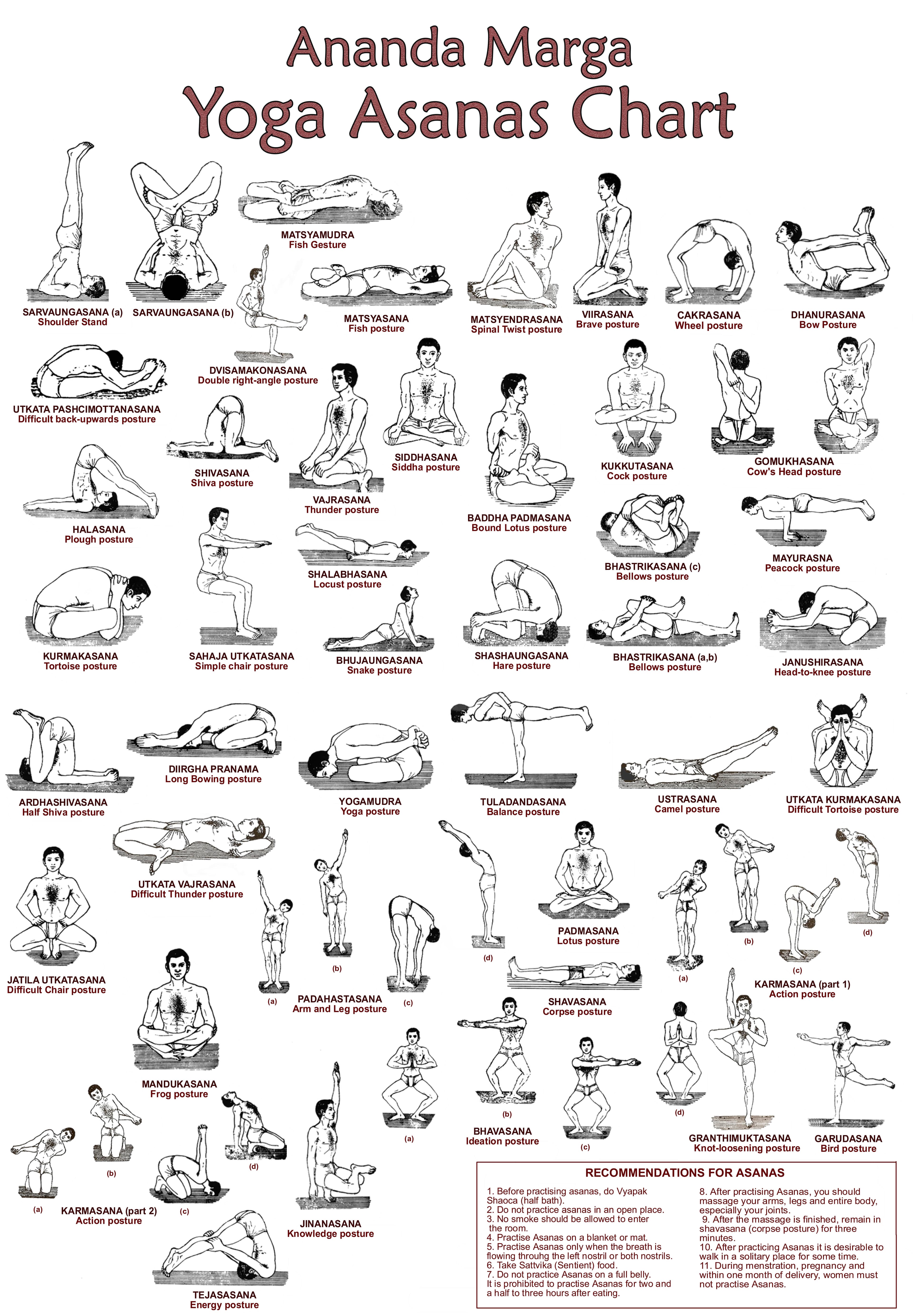
The practice of asanas is not merely physical exercise—it is a sacred discipline that prepares the body and mind for higher spiritual practices. These traditional guidelines, given by Shrii Shrii Anandamurti for practitioners of Rajadhirajayoga, ensure that we approach asana practice with the reverence and precision it deserves.
Preparation and Environment
Take a full bath (Vyápaka Shaoca) before practicing asanas. This purification practice must also be performed before daily meditation. However, if asanas are combined with daily meditation, it is unnecessary to do vyápaka shaoca separately.
Do not practice asanas in an open area, as exposure to sudden changes in temperature may cause you to catch cold. When practicing asanas indoors, keep the windows open to allow air to circulate freely. No smoke should be allowed to enter the room—the less smoke, the better for maintaining the purity of your practice space.
Proper Attire and Equipment
Males must wear tight-fitting underwear. Females must wear tight-fitting underwear, a bra, and tight-fitting exercise clothing. This ensures proper support and prevents distraction during practice.
Practice asanas on a blanket or mat. Do not perform asanas on bare ground, as you may catch cold, and some beneficial secretions that come from the body during asana practice may be lost or contaminated.
Breath Awareness and Timing
Practice asanas only when the breath flows through the left nostril, or through both nostrils—never when the breath flows only through the right nostril. This ancient wisdom recognizes the body's natural rhythms and the connection between nostril dominance and our energetic state.
Do not practice asanas on a full belly. It is prohibited to perform asanas for 2½ to 3 hours after a meal, allowing the digestive system to complete its work before engaging the body in yogic practice.
Dietary Guidelines
Take Sáttvika food (Sentient food) to support your practice. A person for whom it is difficult to give up Rájasika food can, for the time being, take a small piece (¼ of the nut) of myrobalan, or something of similar nature, after meals. However, this procedure does not apply in cold countries where the body's needs differ.
Physical Care
Do not cut the hair on the joints of the body, as this hair serves protective and energetic functions. Keep the nails of fingers and toes cut short to prevent injury and maintain cleanliness during practice.
Post-Practice Protocol
After practicing asanas, massage the arms, legs, and entire body, especially the joints, very well. This helps the energy to settle and prevents stiffness.
After the massage is finished, remain in Shavásana (corpse posture) for at least 2 minutes, allowing the body and mind to integrate the benefits of your practice.
Avoid water contact for ten minutes after Shavásana. An asana practitioner should not massage the body with oil regularly. If you really feel the need, you may rub only a little oil lightly over the body.
After practicing asanas, it is desirable to walk in a solitary place for some time, allowing the subtle effects of the practice to stabilize naturally.
Important Restrictions
Práńáyáma is prohibited immediately after asanas. The body needs time to settle before engaging in breathing practices.
If you must go outside after practicing asanas and your body temperature has not returned to normal, or if there is any difference between room temperature and outside temperature, cover your body properly. If possible, take a deep breath inside the room and exhale it as soon as you step outside. This simple technique prevents catching cold.
While it is not forbidden for asana practitioners to engage in free-hand exercise, running, or sports, all of these activities are prohibited immediately following asanas.
Special Considerations
There is no restriction regarding nostril flow for these meditation asanas: Padmásana (lotus posture), Siddhásana (Siddha posture), Ardhasiddhásana (half Siddha posture), Bhojanásana (cross-legged sitting posture), Viirásana (Viira posture), Diirgha prańáma (long bowing posture), Yogásana (yoga posture), and Bhújauṋgásana (snake posture). For these asanas, there are also no food restrictions.
Women are not permitted to practice asanas or any other form of exercise during menstruation, pregnancy, or within one month of delivery. However, the meditation asanas—Padmásana, Siddhásana, and Viirásana—can be practiced under all conditions, as these are the proper asanas for dhyána (meditation) and dhárańá (concentration).
These guidelines were established by Shrii Shrii Anandamurti for all practitioners of Rajadhirajayoga, recognizing that true yogic practice requires attention not only to the physical postures themselves, but to the entire environment, preparation, and integration that supports our spiritual development. When we follow these time-tested principles, our asana practice becomes a doorway to deeper awareness and lasting transformation.