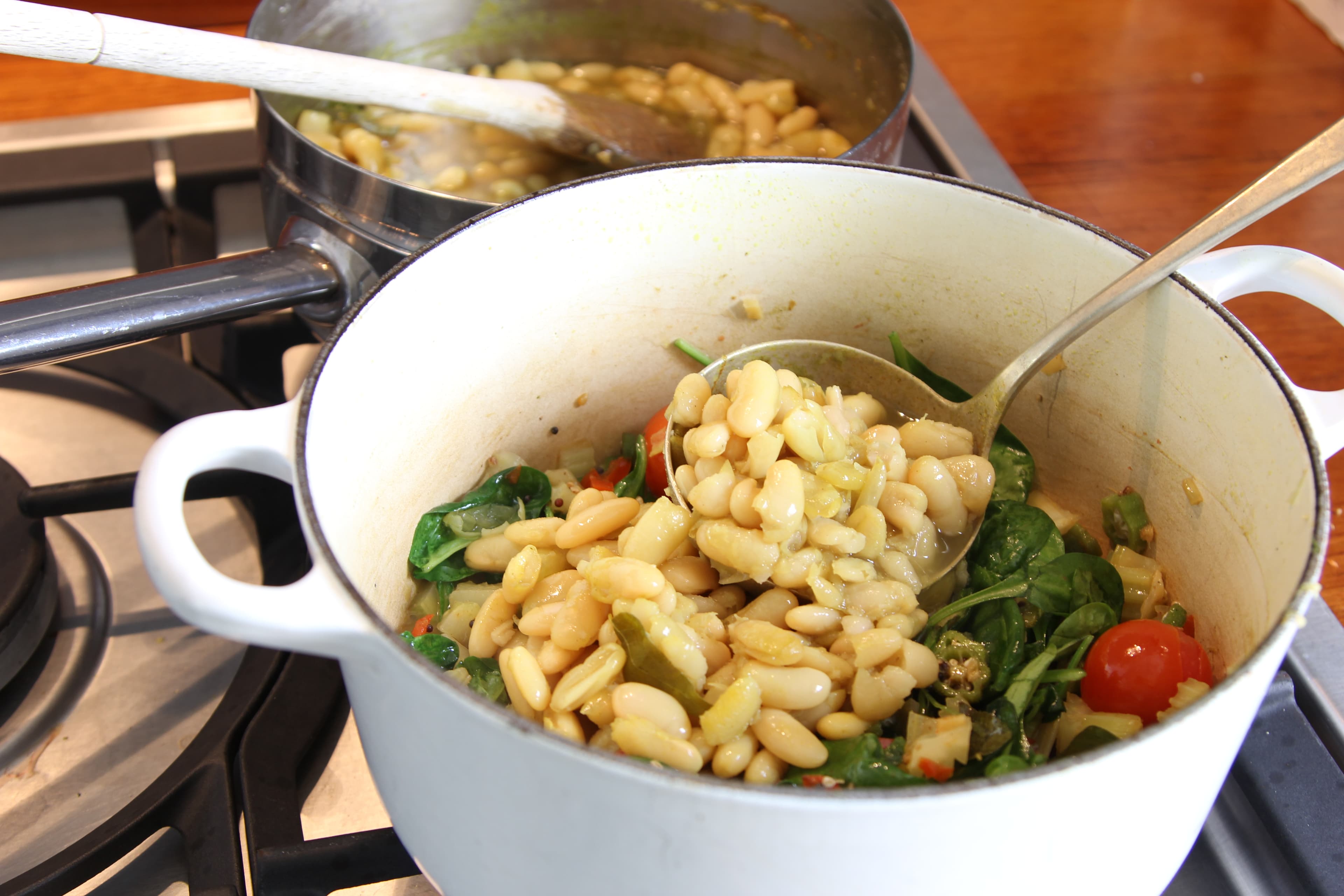
White Bean Varieties: Understanding Navy, Cannellini, and Butter Beans for Conscious Cooking
How do we break down the differences we see in the term "white beans"? Are we referring to Navy beans, Great Northern beans, Cannellini beans, or Baby Lima beans? Well, that term may be referring to any or all of the above. With so many varieties of beans, and several types within each kind, no wonder it's easy to be confused. Let's explore what differentiates one white bean from another and discover how these versatile legumes can nourish our bodies and enhance our conscious eating practice.
Navy (Pea) Beans
Some also call Navy beans "pea beans"—they are small, oval-shaped, and cook fairly quickly. All of these beans, once cooked, become soft, tender, and creamy. They are perfect for making dips and sauces. You can mash them in the pot with a potato masher or blend with a hand-held blender to create a thick consistency that works beautifully for soups, stews, and more. These beans have a mild flavor and are the bean of choice for classic baked beans, Navy Bean Chowder, and quintessential White Beans & Rice.
The bean's name comes from its use as a food staple by the Navy during the early 1900s. Navy beans contain the most fiber of all white bean varieties—approximately 19 grams per 190-gram serving, supporting our body's natural cleansing processes.
Great Northern Beans
Larger than Navy beans but smaller than Cannellini beans, medium-sized Great Northern beans are known for their mild, nutty flavor and firm flesh. Like all beans, they are excellent in soups and stews, and they hold their shape better when cooked than Navy beans. These beans easily take on the flavors of the foods they're cooked with, making them perfect vessels for absorbing the essence of herbs and spices. The French commonly use them in traditional cassoulets.
Cannellini Beans
This Italian variety is called cannellini, a plural form referring to a kind of hard candy. The variety of white bean resembles the candy, probably derived from "cannella" (cinnamon), literally meaning "small tube," from Medieval Latin "canella." These beans are often used in Italian dishes like Minestrone, where their substantial texture contributes to the soup's hearty character.
Cannellini are the largest of the group, and because of their natural kidney shape, they can also be referred to as White Kidney Beans. They are much fleshier compared to Navy or Great Northern beans, with a nutty, earthy flavor and tender flesh. They are excellent for salads, soups, stews, and chili. After cooking, these beans retain their shape and texture well, making them perfect for all sorts of salads where visual appeal matters.
Butter Beans or Lima Beans
Also called Baby Lima beans, these are small, smooth, and creamy, with a rich, buttery flavor that is starchier than other beans. They are frequently used in soups, stews, succotash, and casseroles. In vegetarian cooking, they are often cooked with vegetables and served over rice, or simply prepared with herbs and spices to let their natural richness shine through.
Interchangeable Varieties
You can easily substitute one type of bean variety for another. These beans are, in reality, quite versatile. Even though there are many varieties, the taste and flavor differences are only slight. Most cultures have their personal favorites, but beans can be used interchangeably in any recipe.
For example, Portuguese and Brazilians love feijoada, a popular bean recipe that celebrates the communal nature of cooking and eating together. Let's say your recipe calls for Cannellini beans, and you only have Navy beans—the very common "baked beans" found in cans—on hand. Your dish will still come out fine and taste delicious. Have fun, be creative, and see which variety you like best. Most of all, when cooking, enjoy the process and let the simple act of preparing wholesome food become a meditation in conscious living.
Nutritional Benefits
All beans contain essential micronutrients, vitamins, amino acids, fatty acids, and minerals needed to build complete proteins. For those following a vegetarian or sentient diet, it is important to regularly consume at least one variety of beans daily. These legumes provide the foundation for sustained vitality and support our body's natural cleansing processes while maintaining the alkaline environment that promotes optimal health.
White beans are particularly rich in folate, magnesium, and potassium—minerals that support cardiovascular health and maintain the body's bioelectrical balance. Their high fiber content aids digestion and helps regulate blood sugar levels, making them an excellent choice for maintaining steady energy throughout the day. When we choose beans as our primary protein source, we align our eating habits with the principles of ahimsa—non-violence—while nourishing our system with foods that promote clarity of mind and vitality of body.