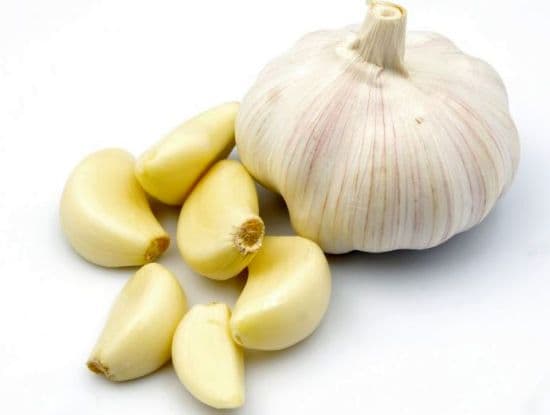
Better Off Without Onion and Garlic?
Garlic and onion are loved across all cultures, east to west. Onion and garlic taste wonderful. They can even be used in specific ways and given measures for healing and health benefits. The idea here is not to challenge this understanding. Rather, we explore the cumulative effect they have on our subtle body while diving into the many ways to cook exquisite food without them.
Imagine jasmine or a rose—smell their fragrance, their captivating, delicate subtleness. Now, imagine a piece of garlic. Can you feel the difference? Just food for thought.
Taste Is a Matter of Habit
Our culture has nurtured us through eating foods that are available not just in our region, but from across the globe. Due to the globalization of commerce, any product is available to us from anywhere in the world at the click of a button, right at our fingertips.
Why do most people love onion and garlic? Our tongue can differentiate six flavors: sweet, sour, salty, astringent, bitter, and pungent. These bulbous root herbs are among the rarest herbs to be found, containing five characteristic flavors: astringent, bitter, pungent, salty, and sweet. The only flavor that isn't prominent is sour! Very few herbs contain all these tastes.
To the family of garlic belong leek, chives, spring onions, French shallots, and scallions. All of them carry allium. Its smell is so potent that in organic farming and permaculture, garlic is used as a natural pesticide and insecticide.
The Ayurvedic Perspective
Onion, garlic, and all the herbs in their family can have positive biological implications for our health. Because they create a reaction within our system whereby the body wants to eliminate these substances as quickly as possible, if there is a dormant disease within the body, the disease will tend to be eliminated together with these herbs through the breath, skin, urine, and other pathways. This is according to ancient Indian Ayurvedic medicine.
What I am emphasizing here, though, is that when our minds and bodies become subtle through spiritual practice and meditation, our sensors and perception also become acute. We begin to appreciate all the subtle energies around and within us. Onion and garlic and all their relatives carry a very intense, dense psychic frequency. If our bodies are full of them, they also become dense, preventing us from perceiving, let alone accessing, these higher frequencies. Concentration often dissipates. Our hormonal system becomes agitated. We become agitated. Meditation and spiritual practice become much more difficult.
Breaking the Cycle of Craving
Keep consuming something you like, and the body begins to adapt to the taste. That's the reason the entire fast-food industry perpetuates three flavors: sweet, sour, and salt. Meat is usually deliciously sweet, bread is sweetened artificially—though it is already sweet in its natural form—ketchup is sour, and potato fries are salty. Keep eating the same diet every day, and the body will crave it. You don't see animals in the wild become obese, do you? It's only a human phenomenon to grow overweight due to our unhealthy eating habits.
A Simple Test
Test yourself: stop eating garlic and onion for 14 days and then see how you feel about the smell and the taste. You will never know the higher tastes until you can transcend denser flavors! Try eating a garlic meal and afterward speak with your friends—see their reactions to your breath. They might move away, which may tell you something about its effect on our system.
The rest of the world will continue enjoying garlic as it always has. But for those seeking greater sensitivity and spiritual refinement, the path may lead through eliminating these powerful herbs and discovering the subtle, delicate flavors that emerge when we do.