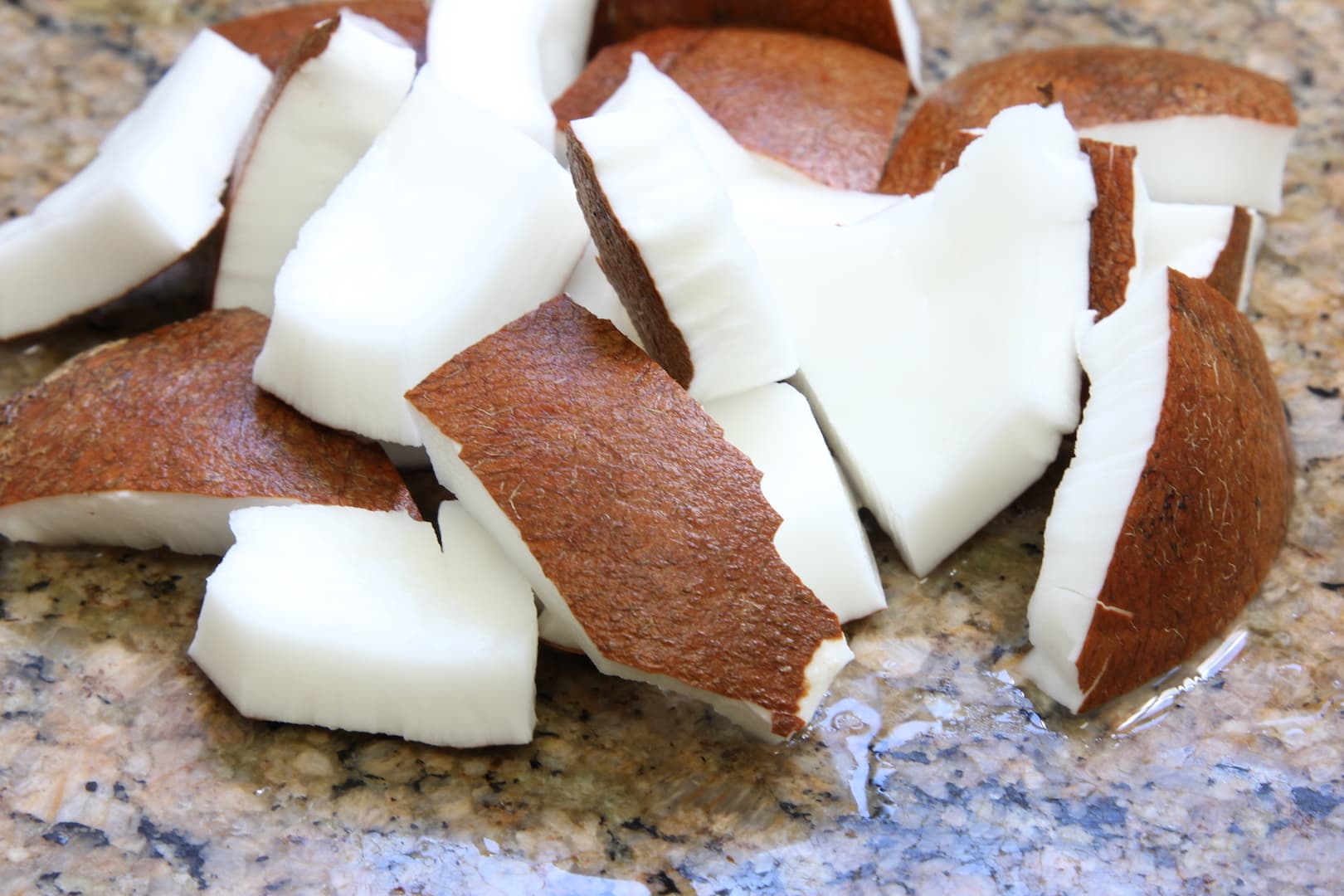
Coconut: The Tree of Life
The coconut tree is known as the Tree of Life across Asia—from Burma and Cambodia to Indonesia, Laos, Malaysia, the Philippines, Sri Lanka, South India, Thailand, and Vietnam. Every part of this sacred tree serves human life in remarkable ways.
The roots provide natural dyes for coloring. The sturdy trunks become timber for building homes, crafting furniture, and creating kitchenware. Communities traditionally weave the leaves into mats, roofing material, and even room dividers for wooden homes. In Malaysia, Indonesia, and Singapore, cooks weave coconut leaves into hollow cubes to steam "Ketupat"—perfectly formed rice parcels that are both functional and beautiful.
Coconut milk and oil transform into countless health and beauty products, treasured across Southeast Asia long before becoming globally popular. According to Ayurvedic medicine, coconut milk holds nutritional value equal to that of human mother's milk. In Southern India, mothers feed nursing babies freshly squeezed coconut milk when they cannot produce sufficient milk themselves—one of the reasons this magnificent tree earned its title as the Tree of Life.
For vegetarians, coconut oil provides a primary source of beneficial fatty acids essential for human development. Additionally, coconut oil's high smoke point makes it ideal for pan-frying and deep-frying, as it remains stable at high cooking temperatures.
Unfortunately, this life-giving fruit suffered tremendous bias during the 1960s due to malicious industrial propaganda. For over half a century, multinational corporations systematically undermined the health benefits of this incredible fruit—the same fate that befell many naturally curative products like noni. Though noni continues to be valued for its beneficial effects in traditional communities, coconut products have triumphantly returned to mainstream health markets worldwide.
Homemade Facial Scrub
Mix 1 teaspoon baking soda with 2 teaspoons extra virgin coconut cream. Apply regularly to cleanse your skin, restore natural glow, and maintain suppleness.
Health Benefits
- Fights Alzheimer's disease
- Lowers blood pressure
- Fights inflammation (rich in lauric acid)
- Inhibits harmful microbial and viral activity (contains capric acid)
- Cancer-fighting potential
- Boosts immune system function
- Enhances memory and brain function
- Increases energy and endurance
- Improves digestion and eases gallbladder diseases
- Nourishes skin health
- Prevents osteoporosis
- Prevents tooth disease and decay
- Benefits type 2 diabetes management
- Supports weight loss by increasing metabolic rate
Understanding Coconut Oil's Unique Properties
Coconut oil is rich in medium-chain triglycerides (MCTs), composed of beneficial fatty acids. While a portion of these fatty acids is lost during refining, they remain abundant in unrefined coconut oil, making unrefined varieties particularly valuable.
A 2008 study published in the American Journal of Clinical Nutrition found that diets high in medium-chain triglyceride-rich oils like coconut oil improve overall body composition and increase fat loss compared to olive oil. Researchers concluded that the powerful weight-loss and fat-burning benefits of MCT oils mean even small changes in oil intake can accelerate weight loss.
Unlike most vegetable oils, coconut oil remains solid at room temperature. During cold winter months, coconut oil becomes quite firm—keeping it near your stove makes it easy to scoop with a spoon or slice with a knife. Coconut oil liquefies at 76°F, and in hot climates, it may remain liquid unless refrigerated.
Cooking with Coconut Oil
Coconut oil's high smoking point of 350°F makes it optimal for almost all cooking methods. Food retailers, including fish and chip shops throughout the UK, now use coconut oil for deep-frying as a healthier alternative.
Before cooking with coconut oil, understand its unique characteristics:
- Easy to digest
- Not readily stored as body fat
- Contains antimicrobial and antifungal properties
- Smaller molecular size facilitates cellular absorption
- Easily processed by the liver and immediately converted to energy
Optimal Frying Temperatures
While deep-frying isn't the healthiest cooking method, understanding proper technique matters. Coconut oil's high smoke point makes it very stable and capable of withstanding high cooking temperatures compared to other oils.
Both peanut and coconut oils have among the highest smoke points available. For those who enjoy fried foods occasionally—living healthy 95% of the time allows for occasional indulgences—proper oil temperature ensures healthier results.
One useful tip: cold foods absorb less oil when fried. Refrigerating items before frying significantly reduces oil absorption. Maintaining proper temperature prevents scorching, better preserves nutrients, and minimizes oil absorption.
For deep-frying, maintain oil temperatures between 330-370°F (160-180°C), making refined peanut and coconut oils optimal choices. When sautéing at lower temperatures around 285°F, either refined or unrefined coconut oil works beautifully.