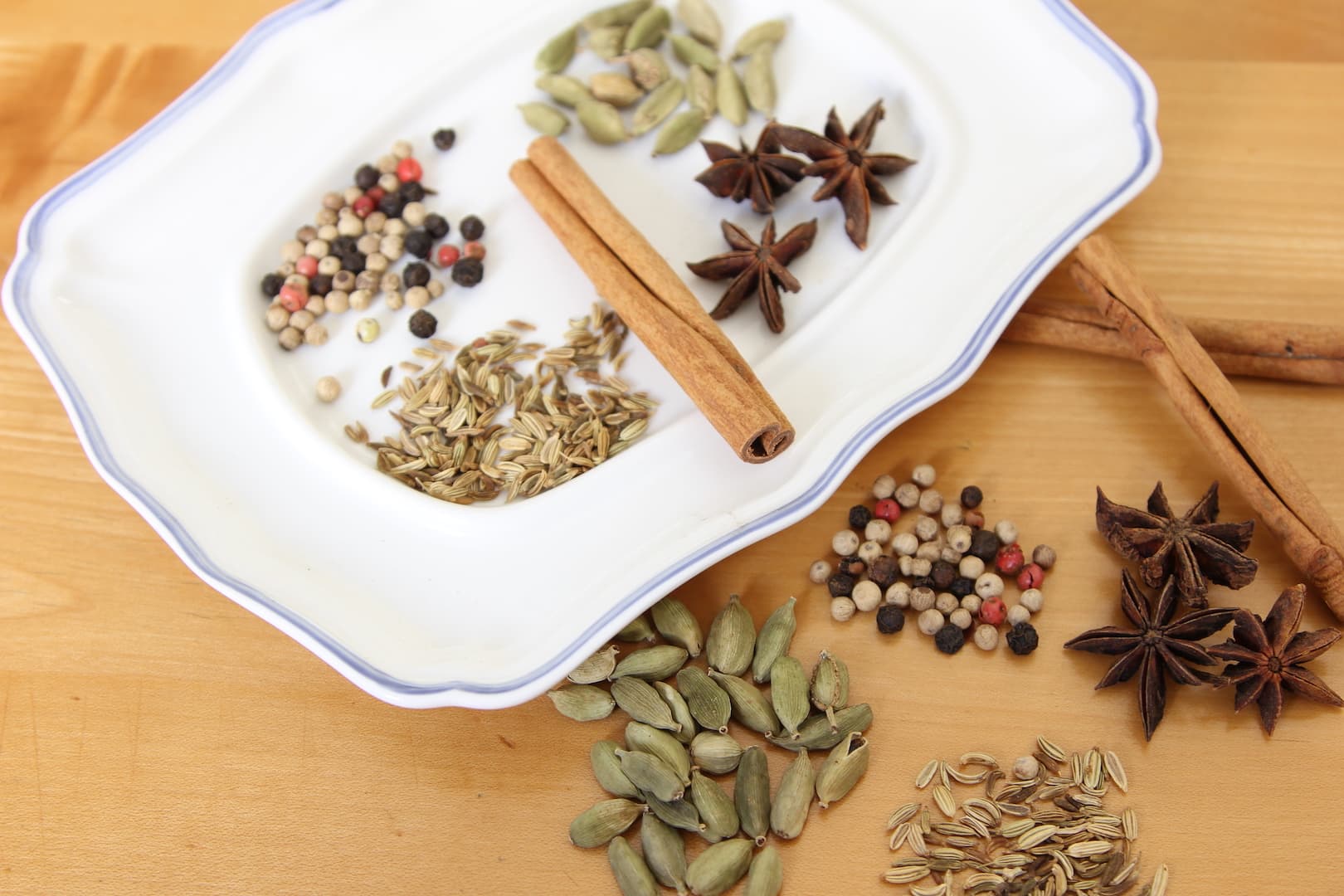
Chinese and Indian Five-Spice Blends: A Tale of Two Ancient Traditions
In the ancient culinary traditions of both China and India, the art of blending five sacred spices has been passed down through generations, creating aromatic symphonies that do far more than flavor our food — they balance our systems and awaken our consciousness to the healing power of plants.
The difference between Chinese five-spice and Indian five-spice lies not just in the variety of spices chosen, but in the entire philosophy of flavor harmony that each culture developed. Where Chinese five-spice seeks to balance the fundamental tastes that correspond to the five elements, Indian Panch Phoran creates a complex interplay of seeds that support digestive fire and metabolic balance.
Chinese Five-Spice: The Symphony of Elements
Traditional Chinese five-spice brings together:
Cardamom — warming and aromatic, supporting respiratory health
Cinnamon — sweet and warming, helping regulate blood sugar
Clove — intensely aromatic, with natural antimicrobial properties
Fennel — sweet and cooling, supporting digestive comfort
Star Anise — with its distinct minty-licorice essence, offering antioxidant compounds
This blend is generally associated with Sichuan cooking, where the interplay of numbing Sichuan peppercorns and warming spices creates dishes that both stimulate and satisfy. Star anise, in particular, carries a unique flavor profile that distinguishes it from regular anise — its eight-pointed star shape contains shikimic acid, a compound valued in traditional medicine.
When selecting peppercorns for authentic Chinese cooking, you'll encounter several varieties: Sichuan peppercorns with their characteristic numbing quality, rose peppercorns with their floral notes, green peppercorns (often pickled in vinegar), white pepper (husked for a cleaner heat), and black pepper (with skin intact for full-bodied warmth). In traditional recipes, these are used proportionally to create layers of heat and complexity.
Indian Five-Spice: Panch Phoran's Digestive Wisdom
Indian Panch Phoran — literally meaning "five spices" in Bengali — represents a different approach to the sacred number five:
Black Mustard Seeds — sharp and pungent, stimulating circulation
Cumin Seeds — earthy and warming, supporting digestive enzymes
Fennel Seeds — sweet and cooling, balancing the heat of other spices
Fenugreek — bitter and warming, traditionally used to support metabolic health
Nigella (Kalonji) — slightly bitter with onion-like notes, rich in protective compounds
This blend of whole seeds creates what Ayurvedic tradition calls "agni-deepana" — the kindling of digestive fire. Each seed contributes not only flavor but specific therapeutic properties that work synergistically to support our body's natural processes.
The beauty of Panch Phoran lies in its versatility. Depending on your recipe, these whole seeds can be dry roasted to intensify their essential oils, or lightly sautéed in oil to create a fragrant tempering (called "tadka" or "phodni") that infuses the entire dish with aromatic depth.
Preparing and Storing Your Blends
When you prepare either blend, the quantities provided here will serve you for multiple dishes — a little goes a long way with these concentrated flavor profiles. Store your remaining spice blend in airtight glass containers away from light and heat, where they will maintain their potency for several months.
The whole seeds in Panch Phoran will retain their essential oils longer than ground spices, making this blend particularly valuable for those who cook regularly with Indian flavors. Chinese five-spice, typically ground, should be used more quickly to capture its full aromatic impact.
These two traditions remind us that conscious cooking involves understanding not just what tastes good together, but what supports our body's harmony and vitality. Whether you're drawn to the warming complexity of Chinese five-spice or the digestive wisdom of Panch Phoran, you're connecting with thousands of years of culinary medicine that treats food as both nourishment and healing.