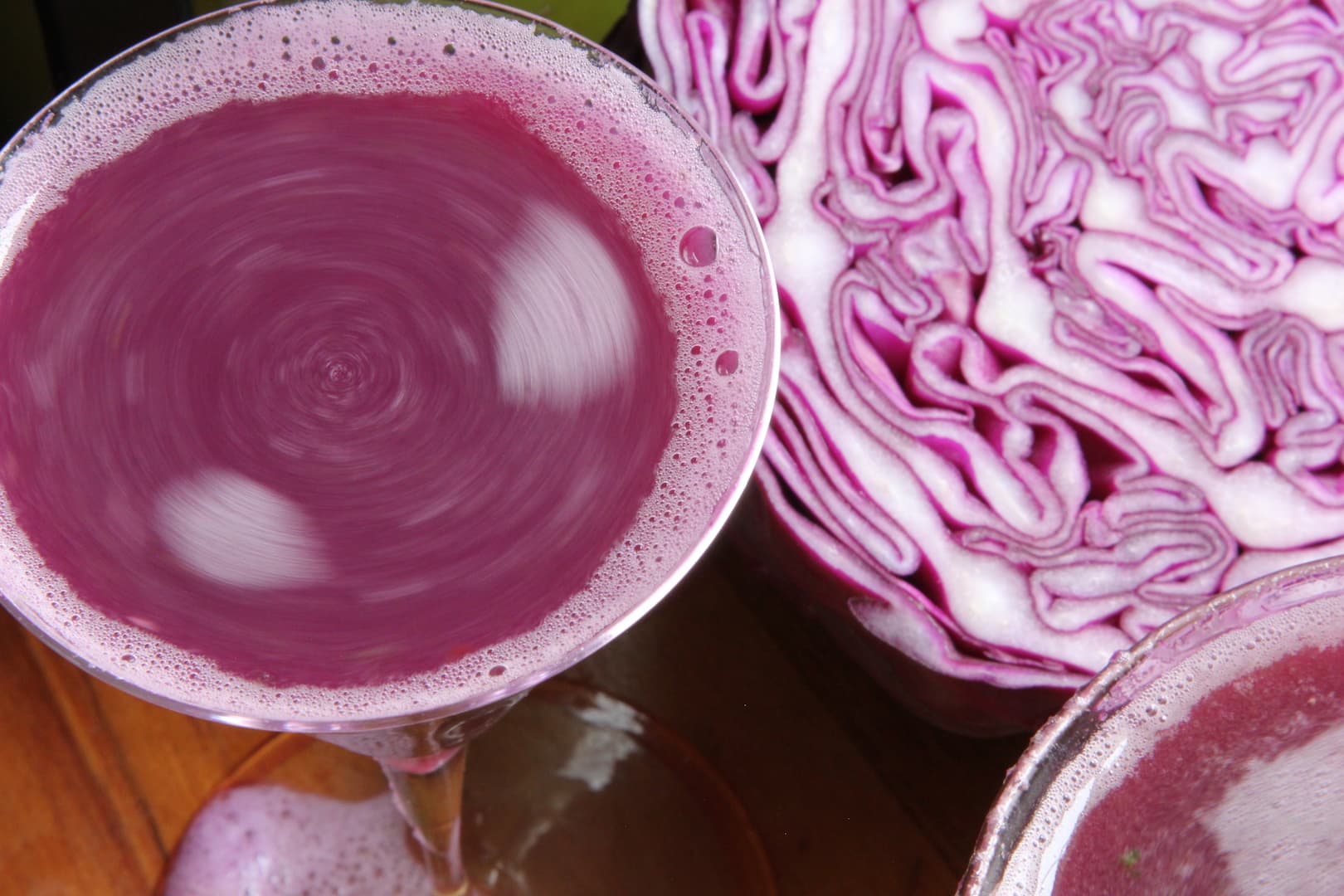
Purple Rain Gut Balancer
This purple rain juice made with purple cabbage is a beautiful fusion of taste and nutrients. Purple cabbage juice can help rebalance gut bacteria, restoring the delicate ecosystem within our digestive system.
Consuming high amounts of processed foods leads to an imbalance in gut bacteria. Beneficial Bacteroidetes break down food effectively for absorption and use, while an overabundance of Firmicutes promotes accumulation and storage, contributing to weight gain. This imbalance often results from overly processed foods like refined sugar, corn syrup, white flour, alcohol, and chemically enhanced meat proteins. When gut bacteria are out of balance, it affects us physically, mentally, and emotionally. Changing our diet and lifestyle is the first step toward a healthier life.
A sentient diet, prepared according to Ayurvedic and Yogic principles, excludes onion, garlic, mushrooms, eggs, and meat. It is excellent for the body, mind, and soul.
Some of the many benefits of a sentient diet include:
- Balanced nutrition
- Relief for people experiencing irritable bowel syndrome (IBS)
- Low in FODMAPs (fermentable oligosaccharides, disaccharides, monosaccharides, and polyols), since the sentient diet avoids onion, garlic, and mushrooms. This restriction has improved symptoms and brings relief to persons with IBS, FGID (functional gastrointestinal disorders), and celiac disease.
Fermented vegetables play a significant role in a sentient diet. Fermented foods are integral to many cultures—from Chinese preserves to Indian pickles, Japanese Tsukemono, Korean kimchi, and German sauerkraut. These probiotic-rich foods are enjoyed worldwide to sustain health and wellbeing. Historically, fermented foods were essential for food preservation during long journeys, as they were homemade and not industrially processed, thereby also benefiting health.
Regarding purple cabbage, although commonly eaten in various forms—raw in salads, steamed, braised, or sautéed—its nutritional benefits are often overlooked. Cruciferous vegetables like cabbage can alleviate celiac issues, IBS symptoms, and other gastrointestinal conditions linked to processed foods. Incorporate bright purple cabbage into your diet for a healthy gut.
Increasingly open-minded medical doctors are trending away from allopathic medicine, acknowledging the impact of diet on health and echoing ancient wisdom. Farmers, who grew their own food, were known for their long, healthy lives—a stark contrast to today's industrialized agriculture.
These harmful chemicals not only destroy bugs and insects but, in the long run, harm us—the consumers. Yet, the fertilizer and pesticide industry thrives as a multi-billion-dollar empire. Hopefully, one day, these economic giants will undergo a transformation, choosing to cherish humanity and nature over mere pieces of paper that offer only a fleeting illusion of power and security.
Returning to our joyful farmers, the wisdom of the ancients was indeed true: good food nurtures a happy gut, thriving organs, a vibrant body, and a content mind. But wait—does this mean that "gut feeling" is more than just a saying? That our gut truly influences our emotions? Absolutely!
Mycobacterium vaccae, a beneficial soil bacterium, stimulates serotonin production—the hormone responsible for happiness. As children, when we rolled in the mud and ran freely through fields and forests, we experienced a pure, unfiltered joy that even medication or drugs fail to replicate in adulthood. Back then, we were deeply connected to nature. This is why farmers, who spend their days immersed in the soil, often radiate a sense of happiness and wellbeing. When we engage with the earth, its bacteria naturally enter our system through our hands, fingernails, and breath, enriching our microbiome.
One such soil-dwelling bacterium, Mycobacterium vaccae, plays a crucial role in serotonin secretion. In Sanskrit, serotonin is known as Amṛta, or "divine nectar"—a substance ancient yogis revered as the elixir of life. The brain naturally produces serotonin when the body and mind are in a state of happiness. Interestingly, its secretion is heightened on certain lunar days, such as the new moon and full moon, making us feel more uplifted and spiritually connected.
Much like Purple Rain Gut Balancer, metaphorical stories also nourish our wellbeing by stimulating dopamine release. So, to conclude, here's a little story to leave you with...
Once, an old master was walking through town when a man, emerging drunk from a liquor shop, staggered along beside him. Noticing the master's red eyes, the drunkard assumed he was also intoxicated and followed him. The master glanced at the man and smiled silently as they walked together.
When they reached the town's outskirts at sunset, the master sat under a tree in meditation, and the drunkard, settling nearby, soon fell asleep. The next morning, sober yet curious, the man observed that the master still appeared red-eyed. Leaning in, he asked, "Where do you buy your wine?" The master smiled and whispered, "I make my own," reminding us that the joy derived from pure, wholesome living endures far longer than that induced by external influences.
Increaseinly openminded medical doctors trending away from allopthic medicine acknowledging the impact of diet on health, echoing ancient wisdom. Farmers, who grew their own food, were known for their long, healthy lives, a stark contrast to today's industrialized agriculture.
These harmful chemicals not only destroy bugs and insects but, in the long run, harm us—the consumers. Yet, the fertilizer and pesticide industry thrives as a multi-billion-dollar empire. Hopefully, one day, these economic giants will undergo a transformation, choosing to cherish humanity and nature over mere pieces of paper that offer only a fleeting illusion of power and security.
Returning to our joyful farmers, the wisdom of the ancients was indeed true: good food nurtures a happy gut, thriving organs, a vibrant body, and a content mind. But wait—does this mean that "gut feeling" is more than just a saying? That our gut truly influences our emotions? Absolutely!
Mycobacterium vaccae,
, a beneficial gut bacterium, stimulates serotonin production—the hormone responsible for happiness.
As children, when we rolled in the mud and ran freely through fields and forests, we experienced a pure, unfiltered joy that even medication or drugs fail to replicate in adulthood. Back then, we were deeply connected to nature. This is why farmers, who spend their days immersed in the soil, often radiate a sense of happiness and well-being. When we engage with the earth, its bacteria naturally enter our system through our hands, fingernails, and breath, enriching our microbiome.
One such soil-dwelling bacterium, Mycobacterium vaccae, plays a crucial role in serotonin secretion. In Sanskrit, serotonin is known as Amṛta, or "divine nectar"—a substance ancient yogis revered as the elixir of life. The brain naturally produces serotonin when the body and mind are in a state of happiness. Interestingly, its secretion is heightened on certain lunar days, such as the new moon and full moon, making us feel more uplifted and spiritually connected.
Much like Purple Rain Gut Balancer, metaphorical stories also nourish our well-being by stimulating dopamine release. So, to conclude, here’s a little story to leave you with...
Once, an old master was walking through town when a man, emerging drunk from a liquor shop, staggered along beside him. Noticing the master's red eyes, the drunkard assumed he was also intoxicated and followed him. The master glanced at the man and smiled silently as they walked together.
When they reached the town's outskirts at sunset, the master sat under a tree in meditation, and the drunkard, settling nearby, soon fell asleep. The next morning, sober yet curious, the man observed that the master still appeared red. Leaning in, he asked, "Where do you buy your wine?" The master smiled, whispered, "I make my own," reminding us that the joy derived from pure, wholesome living endures far longer than that induced by external influences.