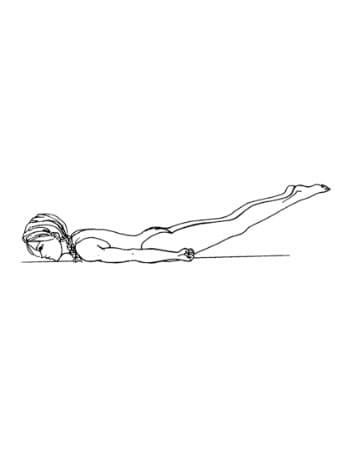
Locust Posture (Shalabhasana)
Shalabhasana or Locust Posture, also known as the Grasshopper pose, is a variety of back bending asana in yoga practice. The name is derived from the Sanskrit word 'Shalabh,' which means grasshopper or locust. It strengthens the lower three cakras. It also lengthens the spine and strengthens the lower back muscles and the shoulders, and the neck. It addresses menstrual problems, rheumatism, and rectal bleeding.
Those with back injuries should ease into this asana by doing a modified version. People with high blood pressure and heart disease, as well as pregnant women and those with abdominal injury should not practice this asana.
How to Execute Shalabhasana:
- Lie down with one's chest in contact with the floor.
- Stretch the hands backward, keeping the palms up.
- Engage the core muscles and slowly raise the lower limbs and the hips up until the waist, keeping the fists clenched.
- Hold this position for 30 seconds before slowly going back to the original position.
Practice: Locust Posture (Shalabhasana) 4 rounds x 30 seconds each
Asanas Relacionados
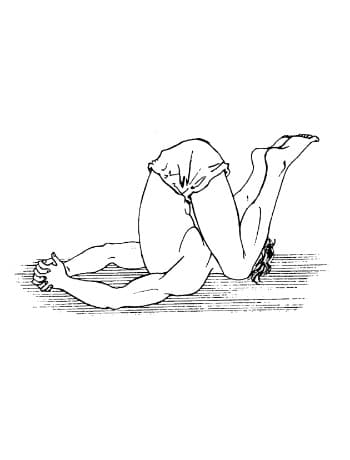
Half Consciousness Posture (Ardhashivasana)
Ardhashivasana, also known as the Half Consciousness Posture , or the Half Shiva Posture is a variation of Shivasana. It has the same benefits as the Shivasana. It activates the digestive system as…
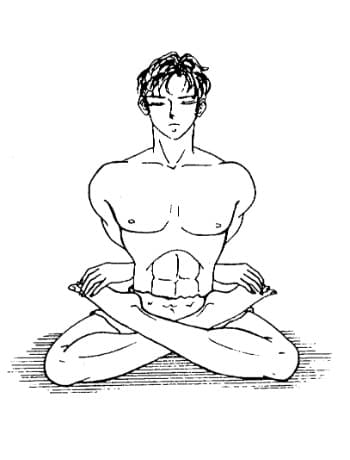
Bound Lotus Posture (Baddha Padmasana)
Baddha Padmasana or Bound/Locked Lotus Posture is a variation of Padmasana. It comes from the Sanskrit words 'Baddha' which means locked and 'Padma' for lotus, and 'Asana' which means posture or…
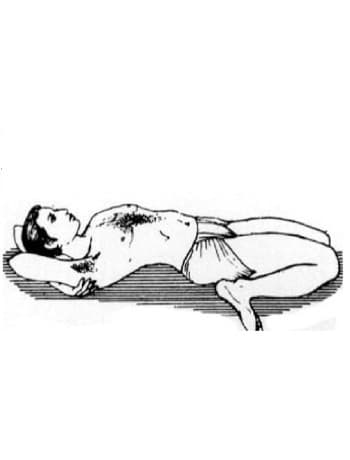
Thunder/Diamond Pose (Vajrasana)
Vajrasana, also known as Thunder or Diamond Pose, is a kneeling asana in yoga. This comes from the Sanskrit 'Vajra' which was a weapon in ancient times that is shaped like a diamond or a…